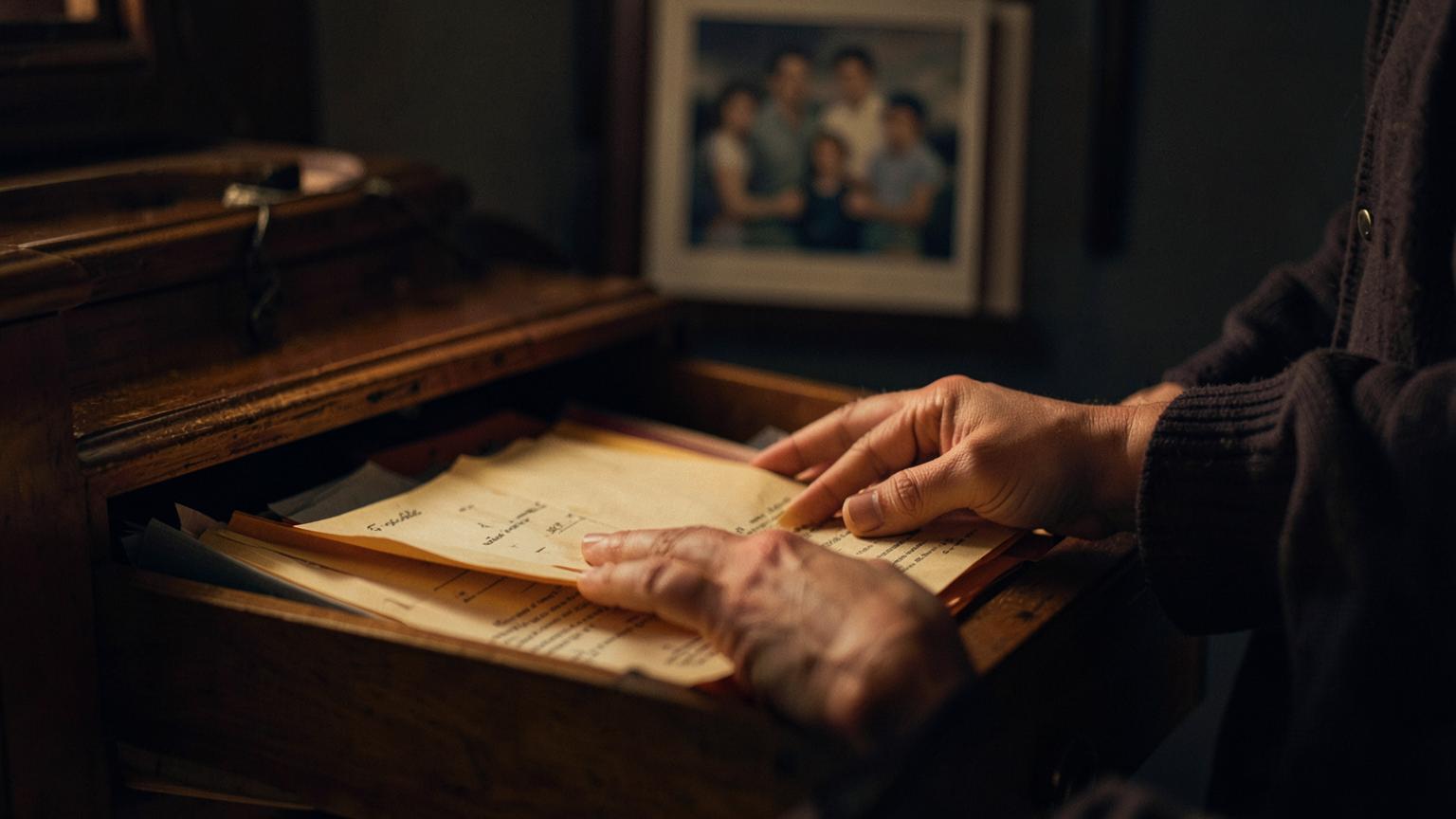
The estate paperwork your family can't find
The will exists. The policy exists. The deed exists. What's missing is the map — and the people who need it are grieving when they go looking.
A friend of ours lost her father in March. He was organized — genuinely organized. There was a will. There was a life-insurance policy. There was a deed to the lake place he'd owned for thirty-one years.
It took her family five months to find all three.
Not because anything was lost. Because the will was with an attorney whose firm had merged twice, the policy number lived in a paper folder in a filing cabinet in a basement, and the deed was in a safe-deposit box nobody had a key to. Every one of those documents did exactly what it was supposed to do. The problem was that only one person on earth knew where they were, and he was gone.
Estate planning solves the legal problem. It doesn't solve the finding problem.
This is the part nobody warns you about. You can do everything right — hire the attorney, sign the trust, name the beneficiaries — and still hand your family a scavenger hunt. Lawyers produce documents. They don't produce an index of your life.
And the finding problem is expensive in a way the legal problem isn't. Probate stalls while an executor hunts for a deed. Life-insurance payouts sit unclaimed because nobody knew the policy existed. Accounts get missed entirely — every state runs an unclaimed-property office precisely because this happens constantly.
The average estate isn't lost in court. It's lost in a drawer.
What your executor actually needs
Strip away the legal vocabulary and an executor needs to answer about a dozen practical questions in the first two weeks. Not one of them requires a law degree:
- Where is the will, and who is the attorney who drafted it?
- Is there a trust, and who is the successor trustee?
- Which insurance policies exist, and what are the policy numbers?
- What property is owned, and where are the deeds and titles?
- Which accounts exist, and at which institutions?
- Who has power of attorney, and is there a healthcare directive?
- Is there a safe-deposit box, a safe, or a storage unit — and where is the key or the combination?
- Who needs to be called: accountant, financial advisor, employer, executor?
That's the whole job, at the start. Eight answers. Most families spend months assembling them because the answers are scattered across paper, email, three institutions, and one person's memory.
The 'where everything is' letter — and why it usually fails
The traditional fix is a letter of instruction: a single page telling your family where to look. It's good advice, and it fails for a boring reason. It goes stale. You write it in 2021, refinance in 2023, switch insurers in 2025, and the letter now points at three things that no longer exist. Worse, it's usually stored in the same place as everything else it's supposed to help you find.
A letter is a snapshot. What a family needs is something that updates itself every time you add a document — and that they can simply ask.
What we built instead
The Estate Vault in AskMyHome is that idea, made practical. You drop in what you already have — will, trust, deeds, titles, power of attorney, healthcare directive, beneficiary forms, life-insurance policies, safe-deposit details. Photos of paper count. Forwarded email attachments count. You don't sort anything and you don't create categories: we read every document, pull out the dates, numbers, names, and institutions, and file it for you.
Then anyone you've given access can type a plain-English question and get an answer with the source document attached:
- “Who is the successor trustee?”
- “What's the policy number on Dad's life insurance?”
- “Where is the deed to the lake house?”
- “When was the will last updated, and which attorney drafted it?”
No folder structure to learn. No naming convention to maintain. No dependence on one person's memory — including yours.
Access, without handing over the keys today
The obvious objection: you don't want your kids reading your will over breakfast. So sharing is role-based. A Viewer can read. An Editor can add. A Co-owner can do both and manage who else gets in. You decide who sees what and you can remove access instantly — and permanently — at any time.
Plenty of members set it up quietly for themselves now and invite the executor later. The point is that the invitation takes ten seconds when the moment comes, instead of five months of searching.
A weekend's work, once
Start with what's already in the house. Photograph the will's first page and the attorney's letterhead. Snap the deed. Forward the insurance email. Add the safe-deposit box details. Twenty minutes gets you further than most families ever get, and every future document takes ten seconds because you can email it straight in.
Estate paperwork isn't morbid. It's the last genuinely kind, practical thing you can do for the people who'll be handling the worst week of their lives. Make it findable.
The Estate Vault is $29/yr on top of any AskMyHome membership, prorated so everything renews on one date.
Once you're inside, you can also earn this vault — or any vault — free for a year every time a friend joins with your referral link. Refer again and it keeps going, year after year.
Keep reading
A neighbor sees water under the garage door. The difference between a wet floor and a ruined house is whether someone can find the shutoff now.
Registration, trailer title, insurance, winterization receipt — boating paperwork has a habit of being wherever the boat isn't.